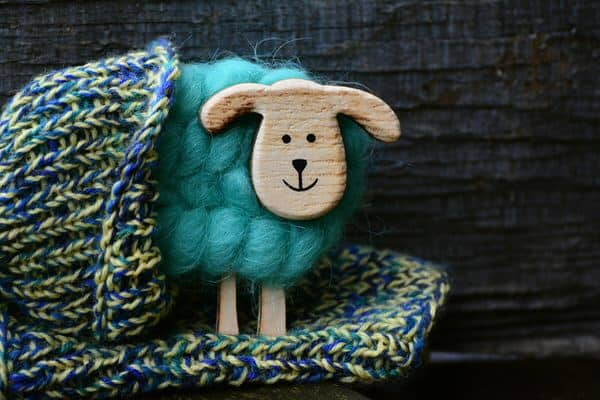
You might think of knitting as something your grandmother used to do, or an activity younger crafters are embracing as part of a DIY revival. But people in this next chapter of life are learning, or re-learning, needle crafts too — and reaping real health benefits of knitting, crocheting, and other needlework along the way.
All types of needlework have the potential to benefit your mood and cognition as you age. This post focuses on knitting, a hobby I’ve rediscovered in recent years, but a similar creative pursuit could offer you comparable benefits.
Creative pursuits benefit your health
A landmark review of studies from 1995 to 2007 found that creative and expressive activities — music, visual arts, movement, and expressive writing — were consistently linked to reduced anxiety and depression, better cardiovascular health, less chronic pain, and a better sense of quality of life.
More recent research sharpens the picture further. A 2025 meta-analysis of 50 controlled studies specifically on adults over 55 found that group arts activities produced a moderate, meaningful reduction in both depression and anxiety — effect sizes comparable to those seen with standard psychological treatments. The benefit was strongest when the activity happened in a group setting.
Health benefits of knitting
Improved mood
An online survey of over 3,500 knitters found significant mood benefits among “frequent knitters” — those who knit more than three times a week. They report being calmer, happier, and more able to handle stress than those who knit less often, and knitting in a group brings even greater benefit than knitting alone.
UK-based knitting therapist Betsan Corkhill points to the meditative quality of a repetitive activity like knitting as a “natural side effect” of the craft. Meditation experts note that knitting isn’t the same as meditation — and as a practitioner of both, I’d agree — but its steady, repeating motion can soothe your mind and release tension in a similar way. If meditation isn’t for you, give knitting a try.
A 2021 international study of over 8,000 crocheters, nicknamed the “Happy Hookers” study, found nearly identical effects: 89.5% said crocheting made them feel calmer, and 82% felt happier afterward. And a 2022 study of seniors in group crochet and knitting programs found real gains in confidence and mood — including during isolating stretches like COVID lockdowns, when the social and calming effects of the craft mattered most.
State of flow
Finding activities where you experience “flow,” the state psychologist Mihaly Csikszentmihalyi made famous, leads to greater life satisfaction. The rhythmic motion of knitting, the sensory pleasure of the yarn, and the satisfaction of watching your work take shape combine to produce real flow — and it becomes even more available once you move past “knit one, purl one.” Challenge yourself with more complex patterns to keep experiencing it as your skill grows.
Ward off cognitive decline
A study of over 1,300 adults ages 70–89, most cognitively normal at the time, found that people who engaged in crafts like knitting or crocheting had lower levels of mild cognitive impairment than people who read newspapers or played music — activities often associated with mental sharpness. A 2014 University of Texas at Dallas study reinforced this: more complex activities, like quilting and digital photography, improved memory function more than less demanding ones. Knitting that requires following a pattern and varying stitches fits squarely into that “complex activity” category.
The research trail hasn’t gone cold since. A 2025 brain-imaging study found that crochet measurably increases attention, tied to the motor-skill learning the craft demands — one more piece of evidence that these crafts aren’t just relaxing, they’re actively engaging your brain.
Manage chronic pain
A study presented to the British Pain Society surveyed 60 adults with chronic pain who knit, and separately observed a weekly in-person knitting group at a pain management clinic. Knitters reported a greater sense of purpose, meaning, and control; those in the group also reported less isolation and more belonging. Researchers linked the benefits to a mix of self-esteem, rhythmic movement (which promotes serotonin release), and mental stimulation, concluding that knitting groups have real potential as an accessible, low-cost tool for managing chronic pain — alongside meditation as a non-pharmaceutical option.
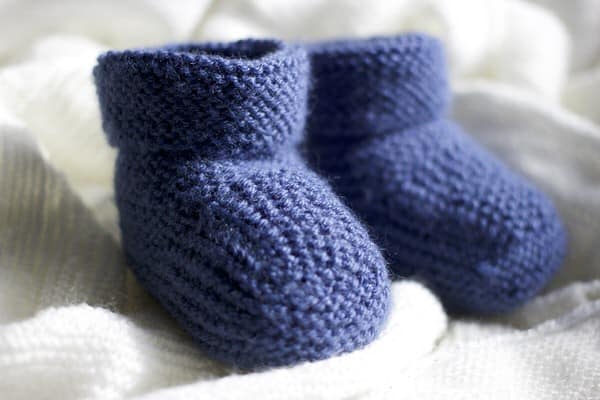
How can you get started with knitting?
It’s easier than ever. There are fewer local yarn shops than there used to be, but online resources are vast.
Local resources
If you have a yarn shop or craft store nearby, check for beginner classes — it’s more fun to learn alongside others, and you’ll get a teacher’s advice on yarn, needles, and materials. Some shops also host drop-in sessions where you can knit alongside more experienced knitters. Local knitting meet-ups are another good way to connect; it may take a little while to find a group that fits, but it’s a great way to make friends while picking up a new hobby.
Online resources
A few favorites for learning, buying supplies, and connecting with other knitters:
Ravelry in particular is a fun hub for connecting with knitting communities by region or interest, wherever you happen to be in the world.
What if you don’t want to end up with a bunch of knit scarves?
You can enjoy the benefits of knitting without gifting friends a homemade scarf every birthday. Beyond scarves, hats, socks, gloves, sweaters, and blankets, you can knit dishcloths, ornaments, toys, and three-dimensional art. You’re limited only by your own creativity.
Health benefits of knitting for charity
There’s a great solution to the “problem” of getting too into knitting: connect it to a good cause. You can knit preemie caps, afghans for people experiencing homelessness, stuffed animals or security blankets for children with serious illnesses, “nests” for injured birds, or sweaters for rescued cats and dogs. Plenty of organizations and bloggers list charity knitting opportunities — a quick search will turn up something matching your interests. You usually don’t need to live near the charity itself; most are happy to receive shipped projects. Ravelry alone hosts dozens of active charity knitting groups worldwide.
My example volunteer knitting project: chemo caps
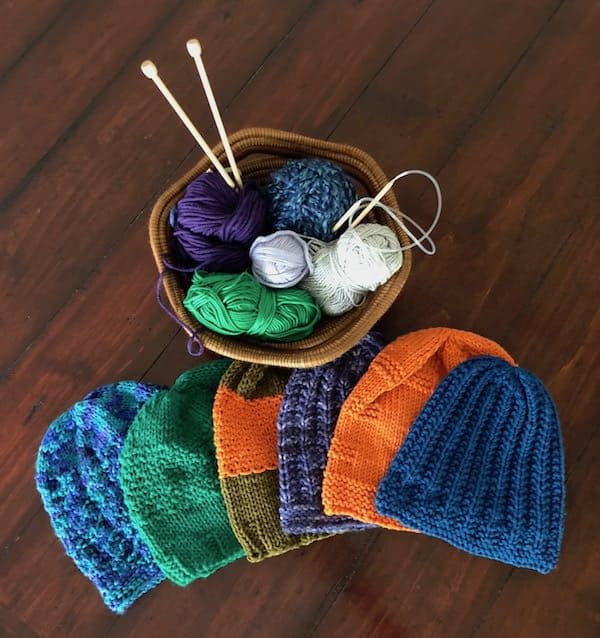
I tend to enjoy short projects — caps, gloves, scarves. If something drags on too long, I lose interest. After re-engaging with the hobby a few years ago, I decided caps were my favorite: quick to knit over a few evenings of TV, with plenty of free patterns online. Once I got better at it, I started designing my own.
The catch: I live in California and don’t have many occasions to wear a cap myself. So I started making chemo caps instead — soft caps in cotton or acrylic, not wool, for people who lose their hair during chemotherapy and want to stay warm, maybe even have a little fun while fighting cancer.
My local health clinic’s cancer treatment center provides donated chemo caps free of charge, and I also found a connection through a local yarn shop. There are plenty of chemo cap groups to find online too, if you’re interested. I wish I could connect personally with the people who end up wearing what I’ve made, but health centers have to maintain confidentiality — I’m not even sure they’d let me tuck in a note with good wishes. Maybe I’ll try with my next batch.
Knit for pleasure, service, and good health
Not everyone will find knitting relaxing — you might get hooked on crocheting instead, or prefer sewing, needlepoint, quilting, or another craft that challenges the mind and engages the senses. If you do take to needle crafts, you’re in good company: an estimated 34 million Americans now knit or crochet, and a 2024 industry survey found the average yarn crafter is 58, with the hobby still heavily weighted toward people at or near retirement age even as younger crafters join in through social media.
You can knit alone or make it social, or both. Most projects are portable, so you can bring your hobby along to fill waiting time — more satisfying than scrolling your phone. You can knit to help someone else and make new friends in the process, boosting your mood, lowering your stress, and building self-confidence along the way. You’ll help preserve mental sharpness, possibly ease chronic pain, and maybe even find that elusive state of flow.
So start clicking those needles — you’ll reap the health benefits of knitting while starting or restarting a hobby in this next chapter. And send me photos of your creations. I’d love to feature some on the blog!